
Sex Offender Checks in Pulaski County
The Arkansas Sex Offender Notification System is the main public channel for a Pulaski County sex offender search. The Arkansas Crime Information Center, or ACIC, manages the state registry. Searchers can narrow results by a person's name or by place, including an address, city, county, or ZIP code. A map view helps with neighborhood awareness. Search by more than one fact when possible because names may be shared and addresses may change.
Local law enforcement supplies the registration link. The Pulaski County Sheriff's Office handles residents in unincorporated Pulaski County, while a city police department handles residents inside its city limits. That split matters when a person needs to confirm where to register or report a possible compliance issue. The state page remains the public search point. Local agencies handle the underlying registration duties, address reporting, and direct follow-up within their jurisdiction.
The public search and a local agency call answer different questions. The registry shows records ACIC may publish. A local office can identify the proper registration jurisdiction and receive a report about a possible lapse. Neither channel should be replaced with a broad web search. Official profiles have controlled fields, named risk levels, and state-supplied status data that a copied listing may lose.
Note: A public result reflects the registry's display rules and should be checked against the full profile before drawing a conclusion.
Pulaski County Registry Display Limits
A missing online result does not prove that no registration record exists. ACIC requires all registrants to undergo an assessment, but Arkansas does not publish every assessed person in the same way. Level 3 and Level 4 records must appear on the state website. Some Level 2 records also appear when the person was at least 18 and the victim was 14 or younger when the offense occurred. Level 1 records generally are not placed on the public web search.
This distinction prevents a common search error. The Pulaski County registry is a public-notification view, not a complete list of every person who has a duty to register. A searcher should read the risk level and status shown on an individual profile rather than assume all levels have equal web visibility. ACIC's sex offender information explains the assessment system, qualifying groups, and public-display rules.
Public display also differs from a criminal-history name check. Arkansas Criminal History, known as ARCH, may report sex-offender registration status as one part of its limited Arkansas result, but the public registry is the direct tool for published registry profiles and location searches. For community awareness in Pulaski County, start with the registry. For review of one's own broader state history, use the official criminal-history process suited to that purpose.
How to Search the Arkansas Sex Offender Registry
The official search accepts several routes, so a Pulaski County sex offender check does not depend on knowing a full legal name. An address or map search may be more useful for nearby records, while county and city filters help separate Little Rock, North Little Rock, Sherwood, and unincorporated areas. Review the site's conditions before searching, and compare the result details carefully.
- Open the Arkansas Sex Offender Notification System and read its conditions of use.
- Enter a name, or choose an address, city, Pulaski County, ZIP, or map-based search.
- Compare the list by photo, physical details, and location rather than relying on a name alone.
- Open the full profile and read the offense, risk level, address, and compliance information in context.
| Field Label | Type | Required | Notes |
|---|---|---|---|
| Name | Text | No | Search for a person by name. |
| Address | Text and map | No | Looks around a entered location. |
| City | Text or dropdown | No | Narrows results to a city. |
| County | Dropdown | No | Select Pulaski County for county results. |
| ZIP | Text | No | Narrows the search by ZIP code. |
| Map or list view | Tab and map | Not applicable | Displays publishable records in the chosen view. |
A location search can be broader than a name search, but it still needs context. Map symbols should lead to the profile, where a searcher can compare the photo, description, address information, offense jurisdiction, and risk label. When a result seems wrong, keep the profile URL or identifying details and ask the responsible agency. Do not rely on a screen capture after the live record has changed.
The official Arkansas registry search is shown in the manifest image below. Its visible search choices support both person-based and location-based checks.
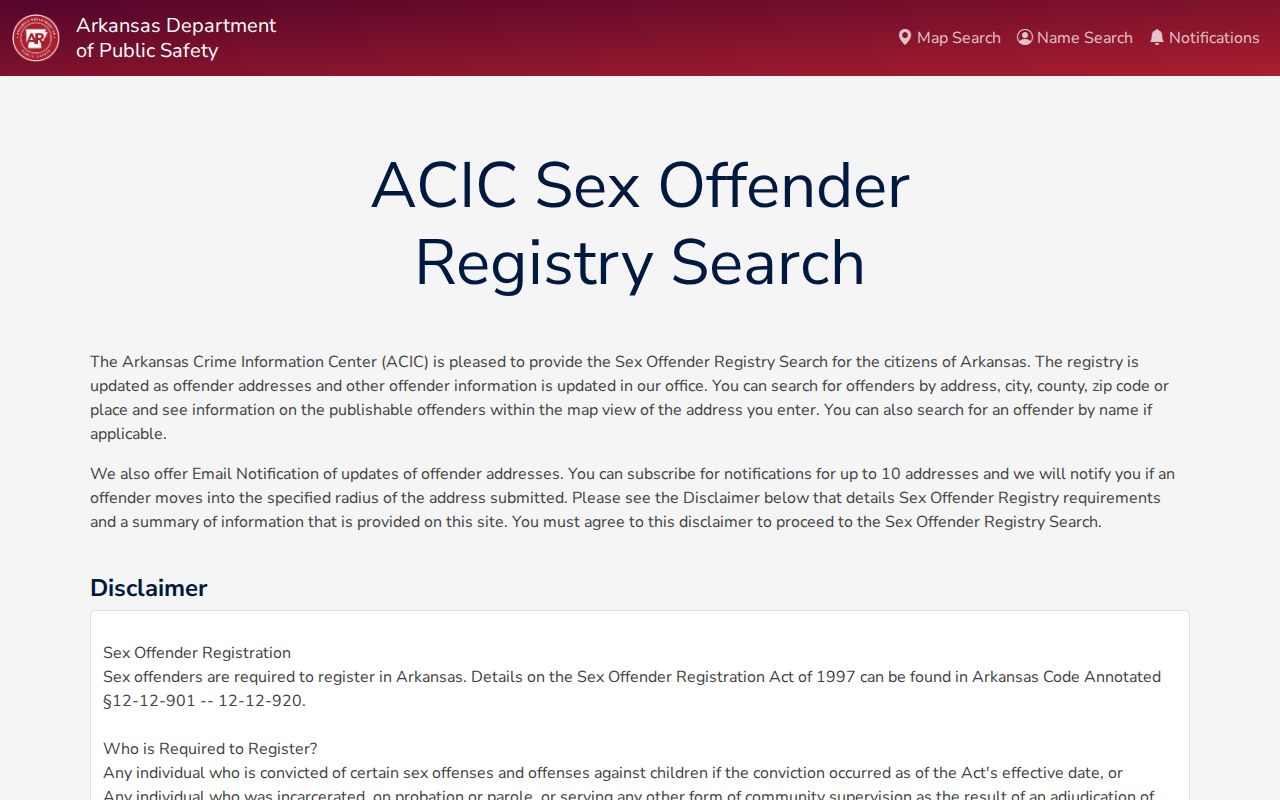
Use those fields to narrow the result set before opening a profile. The image is a portal reference, not a substitute for the current live result.
Pulaski County Offender Registration Offices
City limits decide which local office receives a registration. A person living in unincorporated Pulaski County registers through the Pulaski County Sheriff's Office. Someone living within Little Rock, North Little Rock, Sherwood, or another incorporated city should check with that city's police department. The practical rule follows the law-enforcement agency with jurisdiction over the residence, not merely the county named in a broad location search.
ACIC provides the state-level contact when the correct local office is unclear. Its Sex Offender Registry Manager works at 322 S. Main Street, Suite 615, Little Rock, AR 72201, and the published phone is 501-682-2222. The state manager does not erase the local role. Instead, ACIC coordinates the statewide system while police and sheriff offices receive local registration and address information.
For a registry concern, describe the location precisely enough for staff to determine jurisdiction. A city name in a postal address is useful, but agency boundaries are the key. Pulaski County contains several incorporated cities, and each can have its own police contact. The sheriff's non-emergency route is the practical county fallback for unincorporated areas. Emergency calls should remain limited to an immediate threat.
ACIC Sex Offender Registry
322 S. Main Street, Suite 615
Little Rock, AR 72201
501-682-2222
Pulaski County Sheriff's Office
2900 South Woodrow
Little Rock, AR 72204
501-340-6963
Note: Confirm jurisdiction before visiting because a Pulaski County mailing address may still fall within an incorporated city's police boundary.
Inside a Registry Profile
A public profile helps distinguish one record from another and shows why it was published. Read all displayed identifiers together. A photo and physical description can help resolve a shared name, while the offense and jurisdiction explain the source of the registration duty. Address fields are shown only as registry rules permit, and the public record does not expose identifiers outside the approved profile fields.
| Name and aliases | Published names used to identify the registrant. |
|---|---|
| Photo and physical description | Photo, sex, race, height, weight, hair, eyes, and supplied marks or tattoos. |
| Registered address | Residence, work, or school information displayed as registry rules allow. |
| Offense and statute | Offense description, conviction or adjudication date, and jurisdiction. |
| Risk level | The public Level 2, Level 3, or Level 4 category when displayed. |
| Registration status | Available registration or compliance details shown by the system. |
| Vehicles | Vehicle information may appear when supplied and approved for display. |
The Arkansas criminal-history dissemination law shown below helps explain why repository records are not obtained as ordinary freedom-of-information records.
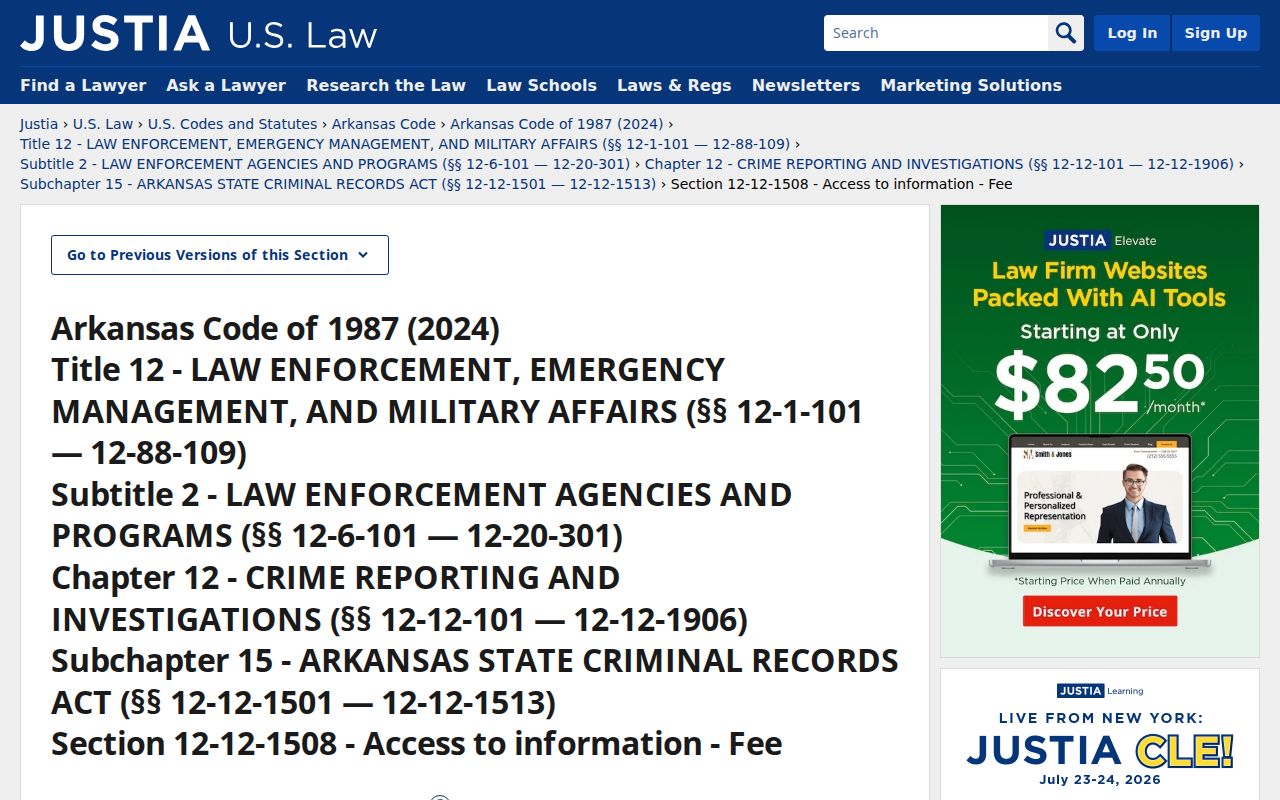
Registry access follows its own statutory public-display rules. It should not be treated as an unrestricted release of the full ACIC criminal-history file.
Some profile fields may be blank or limited because ACIC publishes only approved registry information. A listed offense can come from another jurisdiction, and the profile may use the conviction or adjudication date supplied by that source. Match the whole record. One similar name, one old address, or one physical trait is not enough to identify a person with care.
Pulaski County Offender Move Deadline
An offender moving to Arkansas or returning to the state must register with the local law-enforcement agency that has jurisdiction within three business days after establishing residency. In Pulaski County, that means first identifying whether the residence lies within a city police boundary or in the sheriff's unincorporated jurisdiction. The short deadline makes an early call to the correct agency important.
The duty applies to the registrant, not to a member of the public who sees a possible address mismatch. A searcher should not investigate at a residence or attempt direct contact. Save the public profile details, note the reason for concern, and call the law-enforcement agency with jurisdiction. Officers and registry staff can compare the report with nonpublic registration data and determine whether action is needed.
The three-business-day rule is tied to establishing residency after moving to or returning to Arkansas. It should not be recast as a promise that every public profile changes within three days. Local reporting, assessment, review, and public posting are related steps, but the research does not state that they occur at the same moment. Ask the registry office about a specific status question.
Arkansas Registration Levels and Requirements
Arkansas uses four risk labels based on an assessment coordinated by the Arkansas Department of Correction's Sex Offender Screening and Risk Assessment Program. These labels describe assessed risk and drive public notice. They are not simple offense classes. A registrant who fails to submit to assessment receives a default Level 3 assignment. ACIC's research does not publish a fixed duration or verification interval for each risk label, so those details should be confirmed for the individual duty rather than inferred from the level.
| Risk level | Meaning | Duration | Public web visibility |
|---|---|---|---|
| Level 1 | Low risk | Not set by the risk label alone; confirm the individual duty. | Generally not published on the public website. |
| Level 2 | Moderate risk | Not set by the risk label alone; confirm the individual duty. | Some records qualify for public display under Arkansas law. |
| Level 3 | High risk | Not set by the risk label alone; confirm the individual duty. | Required to be available on the state website. |
| Level 4 | Sexually violent predator | Not set by the risk label alone; confirm the individual duty. | Required to be available on the state website. |
Registration may apply to people convicted of listed sex offenses or offenses against children, people under specified custody or supervision when the Act took effect, some people acquitted because of mental disease or defect, and people covered by the Habitual Child Sex Offender Registration Act. The exact registration period and verification duty depend on the governing law and record, not on a guess drawn from a public search.
Risk level and offense description serve separate roles. The offense field identifies the legal basis shown in the profile. The risk label comes from the assessment process and controls the scope of notice. Reading only one can distort the record. Pulaski County searchers should also avoid converting a level into a prediction about a specific event. The labels support the notification scheme set by Arkansas.
Pulaski County Cross-State Offender Searches
The Arkansas registry is the best first stop for a Pulaski County sex offender search, but a state line can break a narrow search. The Dru Sjodin National Sex Offender Public Website, or NSOPW, searches public data supplied by participating jurisdictions. It is useful when a person may have moved, when the relevant location is uncertain, or when a neighborhood check crosses into another state.
The official NSOPW search page appears in the manifest image below. The national site provides a search layer over jurisdiction data rather than creating a separate registration record.
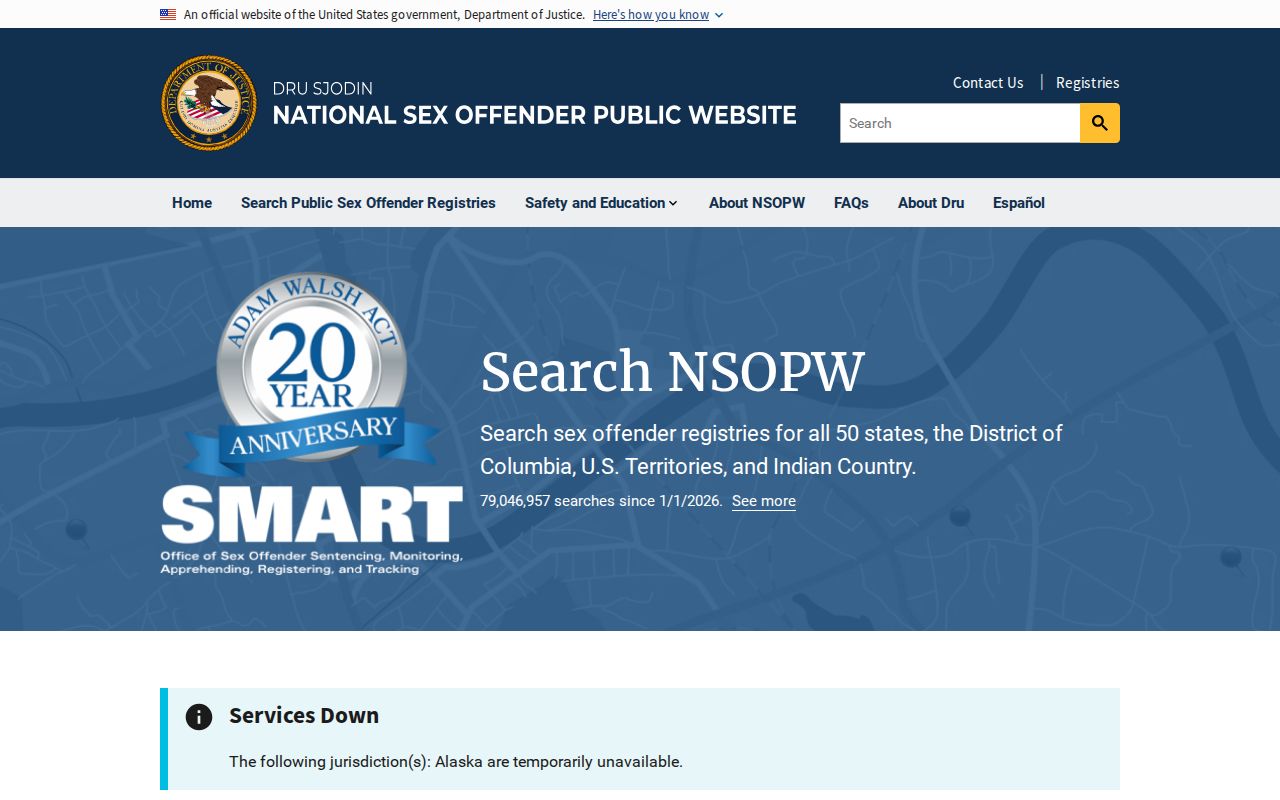
After a national match appears, open the source jurisdiction's profile and use its contact channel for current details. For an Arkansas result, return to ACIC's live record and the Pulaski County law-enforcement agency with local jurisdiction.
Note: NSOPW can only return public information supplied by jurisdictions, so a blank national result does not override Arkansas display limits.
Report Pulaski County Registry Noncompliance
Failure to register, report an address change, or comply with assessment is a Class C felony under the Arkansas Sex Offender Registration Act. A member of the public should report a concrete concern to the local law-enforcement agency, not try to prove the violation through confrontation. Include the public profile, the location or fact that raised concern, and the date it was observed. Police or sheriff staff can decide whether the information conflicts with the official file.
Call a city police department when the address lies inside that city. Contact the Pulaski County Sheriff's Office for unincorporated Pulaski County. ACIC's registry manager can help with a state-system question, but an urgent threat belongs with emergency services. Keep safety and accuracy separate: an old image, a shared name, or a map marker alone may not establish noncompliance.
A useful report is factual and brief. State what the live registry showed, what was observed, and when. Avoid posting accusations to social media or contacting a household. Law enforcement can check whether a change was already reported, whether the map is current, and whether the person falls within that agency's area. This route protects both public safety and the integrity of a Pulaski County registry inquiry.
Community Notification and Lawful Use
Public registry information supports personal, family, and neighborhood safety planning. It can help a person understand published locations, recognize a profile, and choose whether to contact law enforcement with a specific concern. The search does not authorize harassment, threats, intimidation, vigilantism, or unlawful discrimination. A profile should be read as the state presents it, including its risk level, offense jurisdiction, and current status.
The Arkansas record-sealing statute index is shown in the next manifest image. It is a useful reminder that criminal-record access rules and sex-offender registry duties are distinct legal systems.
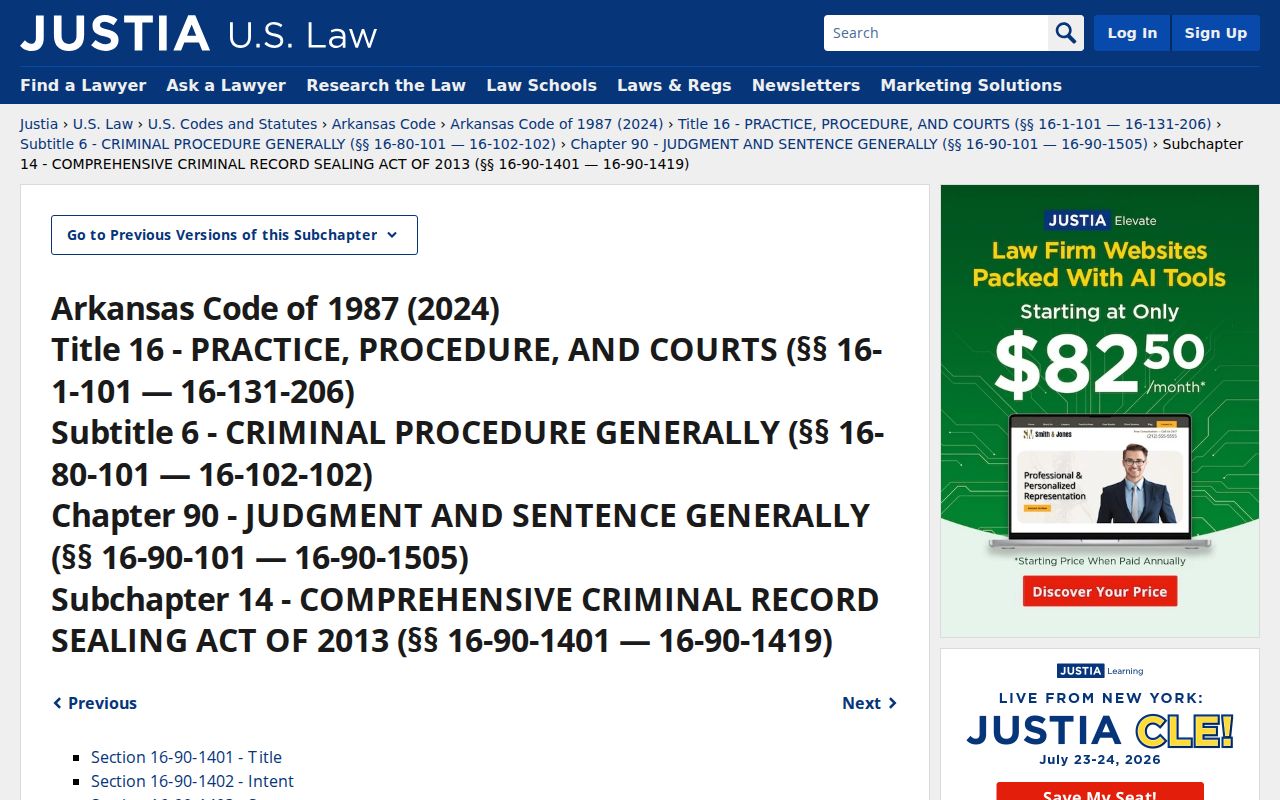
A sealing order may restrict qualifying criminal-history material, but no one should assume it ends a separate registration duty. The current registry profile and the responsible agency remain the sources for public status.
Community awareness works best when the search stays tied to verified facts. Use the live profile to plan ordinary safety steps, discuss age-appropriate boundaries with family members, or give law enforcement a clear report. Do not copy a profile into a new database or add claims the state record does not make. If a profile appears stale, the right response is a question to the agency with jurisdiction. ACIC controls the statewide public view, while Pulaski County police and sheriff offices handle local compliance work. That division gives a searcher a direct path for both online review and responsible follow-up.
Use the registry lawfully: Arkansas's Sex Offender Registration Act, Ark. Code Ann. §§ 12-12-901 through 12-12-920, governs registration and public notification. Do not use Pulaski County registry information to harass, threaten, intimidate, pursue vigilantism, or engage in unlawful discrimination.
Note: The research identifies no separate registry-misuse penalty, so the warning does not assign a penalty that the cited material does not support.